With its lightweight design as a core advantage, aluminum profiles have become one of the most important lightweight materials in the automotive manufacturing industry. They are widely used in areas such as vehicle bodies, powertrain systems, and structural components, effectively promoting the upgrading and transformation of the new energy vehicle industry
Why Aluminum Profiles Dominate the New Energy Vehicle Manufacturing Industry
Introduction
As electric vehicle prices become increasingly affordable, global electric vehicle sales continue to break records. In 2024, global electric vehicle sales exceeded 17 million units, accounting for over 20% of total sales. Notably,The 3.5 million new electric vehicles sold in 2024 alone surpassed the total global electric vehicle sales for 2020.

At the same time, the use of aluminum profiles in automotive manufacturing continues to increase significantly. Industry forecasts suggest that by 2030, the average aluminum content per vehicle may reach 256 kg, driven largely by the shift toward lightweight platforms and all-aluminum body structures.
These trends clearly show that aluminum profiles are becoming a foundational material in the future of automotive engineering.
Why Are Profile Aluminum So Important in the New Energy Vehicle Market?
The transformation of the automotive industry toward electrification, lightweight design, and sustainability has significantly increased demand for aluminum profile materials.
Electric vehicles require more efficient energy utilization, and reducing vehicle weight directly improves driving range. Compared with traditional steel structures, aluminum-based solutions offer a superior balance between strength, weight, and sustainability.
Aluminum Extrusion Profiles Based on “Dual Carbon” and Circular Economy Development
Global carbon emission regulations are becoming increasingly stringent. Regulatory frameworks, including China’s “Dual Carbon” roadmap and North America’s CAFE standards, require passenger vehicles to significantly reduce carbon emissions throughout their entire lifecycle.
The global pursuit of carbon neutrality is reshaping the automotive industry's material choices. Extruded aluminum profiles perfectly align with global carbon neutrality and circular economy goals, offering three core sustainability advantages:
- Important Potential for Low-Carbon Upgrades in Extrusion Production
Modern aluminum extrusion plants can integrate renewable energy sources such as hydropower, wind power, and solar power, eliminating fossil fuel consumption during billet heating and extrusion processes.
Recycled aluminum production further significantly reduces carbon emissions.Compared to primary aluminum production, recycled aluminum extrusion can reduce smelting carbon emissions by over 90%. As global green energy penetration increases, the carbon advantage of aluminium extrusion over high-carbon steel rolling and stamping processes will further expand.
- Continuous Carbon Reduction Throughout the Vehicle's Lifecycle
Aluminum's density is only one-third that of steel. Replacing steel structural components with extruded aluminium profiles can reduce vehicle weight by 30% to 40% while maintaining the same structural rigidity.
Weight Reduction lowers energy consumption during acceleration, cruising, and frequent charging, thus reducing operating carbon emissions over the vehicle's 8-12 year lifespan, aligning with low-carbon manufacturing trends.
- Extremely High Recyclability
Aluminum retains almost 100% of its original mechanical properties after recycling, while the energy required for remelting and re-extrusion is only 5% of that required for primary aluminum smelting.
Industry data shows that currently over 90% of automotive aluminum profiles are recycled for secondary production, far exceeding the 65% recycling rate of steel structural components.
Performance Advantages of Aluminum Profiles
Aluminium section possess five key properties: lightness, strength, conductivity, durability, and plasticity, making them a "lighter steel" and an ideal choice for the manufacturing needs of new energy vehicles.
The five main advantages are as follows: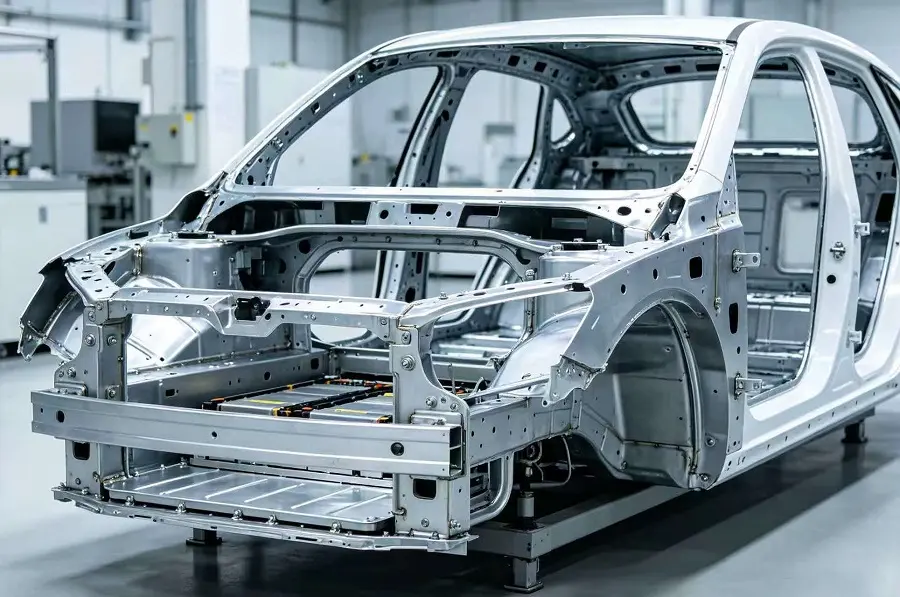
- Ultra-lightweight Characteristics
The density of aluminum alloy is 2.7 g/cm³, while that of steel is 7.85 g/cm³. Aluminum profile components with the same structural load-bearing capacity weigh less than 35% of equivalent steel components, significantly reducing the weight of heavy-duty electric vehicles equipped with batteries.
- High Specific Strength
Through extrusion processes and heat treatment, automotive aluminum alloys (such as 6-series and 7-series) can achieve tensile strengths of 300-500 MPa, far exceeding the specific strength of steel.
By optimizing the extrusion cross-section design, aluminum profiles can achieve the same collision energy absorption as steel while maintaining lower mass, thus simultaneously achieving safety and lightweight goals.
- Excellent Thermal Conductivity
Aluminum has a thermal conductivity of approximately 237 W/(m·K), more than four times that of carbon steel. Aluminum extruded profiles are widely used in battery cooling frames, motor housings, and electronic control heat sinks.
Aluminum's high thermal conductivity rapidly dissipates the intense heat generated during battery cell charging and discharging, stabilizing component operating temperatures and preventing thermal runaway.
- Self-Passivating and Corrosion Resistance
Aluminum rapidly forms a dense, self-healing aluminum oxide(AI2O3) passivation film in air. This film is extremely stable in acidic, alkaline, and neutral environments. This oxide film resists impacts from gravel, salt water from roads, and humid air.
Battery trays using aluminum profiles ensure the battery pack's sealing and structural integrity throughout the vehicle's entire lifespan (over 10 years), preventing short circuits caused by corrosion.
- Excellent Extrusion Formability
Hot extrusion molding processes can produce profiles with extremely complex cross-sections, featuring various cavities, slots, and bosses in a single process.
Manufacturers can customize wall thickness, stiffeners, and assembly slots within the same profile to integrate multiple functional components, reducing welding joints and assembly steps and simplifying assembly compared to multi-piece stamped steel components.
Applications of Aluminum Alloy Materials in New Energy Vehicles
The application of aluminum alloy extruded profiles in automobiles covers almost all major systems. Application scenarios include:
Battery System (Core Incremental Scenarios)
The battery, motor, and electronic control system ("three-electric") of new energy vehicles are extremely sensitive to temperature, and aluminum's excellent thermal conductivity makes it an ideal thermal management material.
- Battery Tray and Housing
Lightweight and robust, effectively absorbing collision energy, providing structural protection and thermal stability for the battery pack.
- Battery End Plate and Bracket
Used to fix and support the battery module, ensuring its stability under complex operating conditions.
- Cooling System
Aluminum profiles are used to make battery cooling plates or integrated cooling pipes to help dissipate heat and ensure that the battery operates within its optimal temperature range.
Vehicle Body Frame Structure and Safety Components
The vehicle body is the most widely used area for aluminum profiles, mainly used to construct the vehicle's "skeleton" and "armor".
- Front and Rear Bumper Beams
Hollow extruded profiles absorb collision kinetic energy through controlled deformation, protecting occupants and the battery pack.
- Side Beams (Side Impact Protection Structure)
Large rectangular hollow aluminum profiles extend along the sides of the vehicle body, resisting side impacts and forming the core of the body's rigid frame.
- Longitudinal Beams and Reinforced Frame Structure
As the main load-bearing structures of the body, the longitudinal beam assemblies and lightweight automotive aluminum chassis have extremely high requirements for strength and rigidity. Integrated extruded alloy frames support the all-aluminum body platform, effectively meeting these requirements.
- Other Structural Components
Including A-pillars, B-pillars, crossbeams, and seat crossbeams, aluminum section are being gradually adopted to achieve overall vehicle weight reduction.
Chassis and Suspension System
Chassis components withstand continuous road vibrations and impacts. High-toughness alloy extruded profiles construct a "solid chassis" for the vehicle body, thereby enhancing driving comfort.
- Subframe
An integrated multi-channel aluminum extruded subframe replaces the welded steel subframe, providing structural support for the motor and significantly reducing weight.
- Control Arms
Lightweight suspension control arms are manufactured using forged extruded hybrid aluminum alloy profiles to improve suspension stability.
- Steering Knuckles
Manufactured using forged aluminum alloy to achieve precise handling performance.
Power and Thermal Management System
- Motor Housing
Utilizing the lightweight, high strength, and excellent thermal conductivity of aluminum, precision extruded profiles are used to achieve integrated structural support and efficient heat dissipation.
- Inverter and Electronic Control Cooling Radiator
The frame is made of 6-series aluminum alloy (e.g., 6063-T6) to ensure flatness and sealing, while internal flow channels enable efficient heat dissipation.
- Integrated Chassis Thermal Management Structure
The coolant integrated module (ICM) housing, multi-way valve body bracket, and pipe mounting brackets are all made of aluminum profiles instead of steel components.
Extension to Commercial Vehicles
Aluminum profiles are also widely used in commercial vehicles such as electric trucks and buses, for example, in the manufacture of aluminum alloy cargo boxes, cabs, and the body frames and bodies of semi-trailers and refrigerated trucks.
These applications fully utilize the thermal conductivity, ease of processing, and lightweight properties of aluminum, playing an indispensable role in improving range, ensuring safety, and optimizing performance. With technological advancements, its application in automobiles will become even more in-depth and widespread in the future.
How Aluminum Profiles Improve the Performance of New Energy Vehicles
Aluminum profiles enhance the overall performance of vehicles from multiple dimensions. Through the core advantage of "light weighting," they improve key indicators such as range, safety, handling, thermal management, and sustainability in a synergistic way, making them an ideal material for new energy vehicles.
Significantly Increased Driving Range Through Weight Reduction
The lithium-ion battery packs in electric vehicles are heavy, typically increasing the vehicle's curb weight by 300-600 kg. This increased weight leads to faster battery consumption, thus shortening the actual driving range. Reducing vehicle weight to offset the battery weight is an inevitable trend.
Replacing steel components with aluminum profiles can achieve a weight reduction of 30% to 45%. Under standard testing conditions, a 100 kg weight reduction through aluminum profiles can increase the driving range of an electric vehicle by 6-10 kilometers.
Improved Battery Efficiency Through Optimized Thermal Management
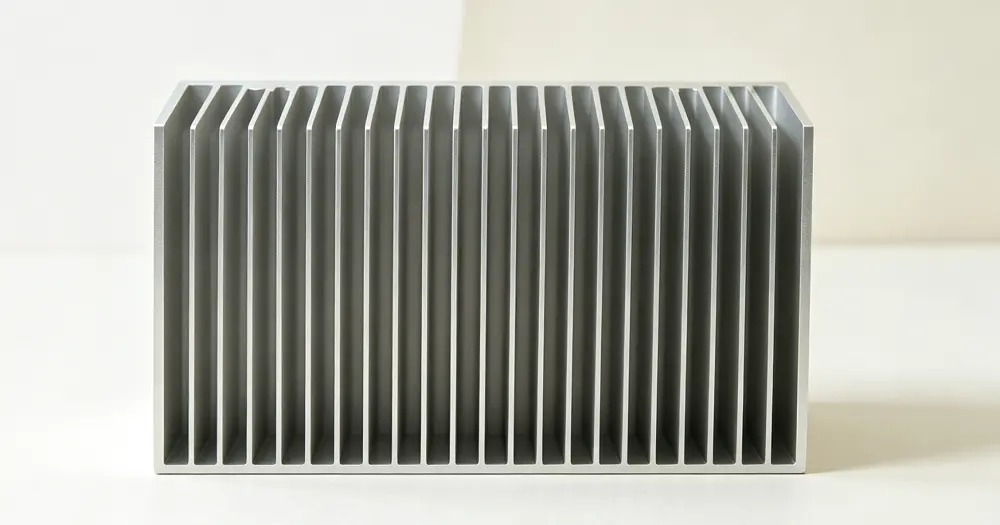 Utilizing aluminum's excellent thermal conductivity, hollow extruded aluminum battery frames, heat dissipation fins, and closed-channel "harmonica tubes" or "flat profiles" are manufactured, forming built-in cooling channels for efficient heat dissipation and eliminating the risk of thermal runaway caused by localized overheating.
This keeps the battery within its optimal operating temperature range, thereby improving charge and discharge efficiency and extending battery life.
Improving Vehicle Handling and Braking Performance Through Weight Reduction
Aluminum has only about one-third the density of steel. Using aluminum profiles significantly reduces unsprung mass, improves suspension response, and allows tires to grip the road better, thus improving vehicle handling and comfort.
A lighter body means less inertia during acceleration and lower load during braking, improving both acceleration performance and braking effectiveness.
Enhancing Structural Safety Through Energy Absorption Design
Precision extrusion of aluminum alloy creates a unique hollow, multi-cavity structure, making it an excellent impact energy-absorbing material.
During a collision, this controlled deformation absorbs impact kinetic energy, dispersing the impact force and protecting the passenger compartment and the heavy battery pack.
Reducing Lifecycle Maintenance Costs Through Corrosion Resistance
Aluminum naturally forms an oxide layer that resists corrosion from the external environment. This prevents moisture or road debris from penetrating the battery casing, protecting sensitive battery modules and high-voltage components from short circuits. It also prevents rust on components such as crash beams, ensuring safe deformation of vehicle parts during collisions and maintaining long-term crash safety.
Combined with surface treatment processes such as anodizing or powder coating, its durability under harsh weather conditions can be maximized. This ensures the vehicle's lifespan, prevents corrosion-related failures, and reduces long-term maintenance costs.
Advantages of Aluminum Profiles Compared to Steel
Compared to steel structures, aluminum profiles provide several critical advantages:
- Vehicle Weight Reduced by 30%-40%
Aluminum has approximately one-third the density of steel. Aluminum profile components of the same stiffness are 30-40% lighter than equivalent steel structures.
By replacing steel with aluminum in the chassis, body frame, and battery tray, manufacturers can significantly reduce the overall weight of vehicles and improve the energy efficiency of electric vehicle systems.
- Superior Heat Dissipation Performance
The thermal conductivity of pure aluminium is approximately 237 W/(m·K), ordinary carbon steel is approximately 45–65 W/(m·K).
Steel battery and motor housings require separate, bulky heat sinks, while aluminum profiles integrate cooling channels directly into the structural frame, improving heat dissipation efficiency, simplifying assembly, and reducing the number of parts.
- Impact and Crash Safety
Although aluminum structures are lighter, they absorb more impact energy per unit mass than steel structures.
Under the same mass, aluminum alloy has approximately twice the specific energy absorption of steel.
- Flexible Integrated Forming Design
Steel structural parts rely on multi-piece stamping and welding assemblies, creating dozens of seam joints prone to fatigue cracking under long-term vibration. Single-piece customized aluminum extrusion profiles integrate multiple ribs, mounting slots and cooling channels, cutting welding points by over 60% and improving long-term structural durability.
- More Green and Environmentally Friendly
Aluminum is a highly sustainable material that can be 100% recycled. Producing recycled aluminum requires up to 95% less energy than smelting primary metal.Carbon emissions from recycled aluminum are approximately 22% of those from recycled steel. significantly lowering the vehicle's overall carbon footprint.
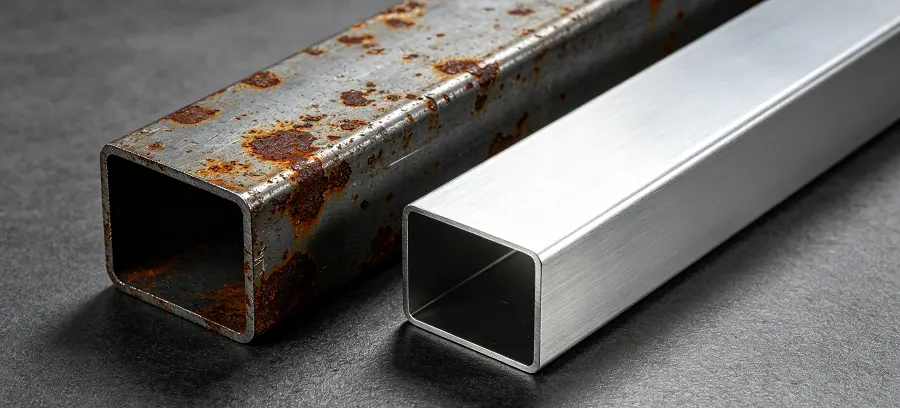
Aluminum profiles have become a key material for new energy vehicles due to their lightweight advantages. Steel remains a secondary material for critical high-load, core load-bearing, and ultra-high-strength protective components.
In the manufacturing of new energy vehicles, a hybrid steel-aluminum synergistic approach is often adopted to balance cost, safety and lightweighting.
How to Choose the Right Aluminum Alloy for New Energy Vehicles?
6000 Series (Al-Mg-Si)
Excellent overall performance, good formability, strong corrosion resistance, and good paint hardening effect, making it ideal for stamping exterior body panels (such as doors and hoods), balancing lightweight and surface quality.
- 6061/6082: The first choice for core load-bearing components and high-strength collision structures.
- 6063: Suitable for complex, thin-walled extruded parts and parts requiring high surface finish.
5000 series (Al-Mg)
Excellent formability, suitable for interior body panels and complex shaped parts, but shape marks may appear during the forming process, so process control is required.
- 5052/5754: Best suited for battery covers, interior panels and molded covers that require weldability and moderate strength.
7000 Series (Al-Zn-Mg-Cu)
Ultra-hard aluminum alloy with extremely high strength, suitable for critical structural components with high requirements for strength and impact absorption.
- 7075: Used for high-impact protection, collision management systems, and specialized suspension components (e.g., front and rear bumper anti-collision beams).
Cast alloys (e.g., A380, ADC12)
Ideal for high-pressure die casting (HPDC), allowing multiple stamped parts (e.g., front and rear subframes or motors) to be replaced by a single complex, lightweight casting.
Material Innovation: Higher Performance Aluminum Alloys
New 6-Series Aluminum Alloy: The LeS6 Ultra aluminum sheet, jointly developed by Li Auto, has a yield strength nearly three times that of traditional aluminum alloys, providing higher performance material support for the vehicle body and battery components.
Conclusion
Aluminum profiles are designed to create a virtuous cycle centered on "lightweighting," leading to multiple benefits such as "longer range," "high safety," "superior handling," "strong heat dissipation" and "greater environmental friendliness".
With continuous innovation in aluminum technology and the application of materials such as recycled aluminum, the future of automobile manufacturing is moving towards multi-material integration centered on aluminum. This will contribute to the continuous upgrading and green development of the new energy vehicle industry.
| Fortune Alu Co.,Ltd.Professional Aluminum Manufacturer, Ready to Serve You. |
| You Are Welcome to : phone call, Message, Email & search for us, etc. |
| Email:info@fortune-alu.com |

 Utilizing aluminum's excellent thermal conductivity, hollow extruded aluminum battery frames, heat dissipation fins, and closed-channel "harmonica tubes" or "flat profiles" are manufactured, forming built-in cooling channels for efficient heat dissipation and eliminating the risk of thermal runaway caused by localized overheating.
