This article introduces what recycled aluminum is and recycled aluminum profiles, explains the raw material sources of recycled aluminum and why aluminum can be recycled indefinitely without losing performance. It also explains why recycled aluminum extrusion profiles are a strategically significant low-carbon alternative.
Aluminum Profiles - What is Recycled Aluminum?
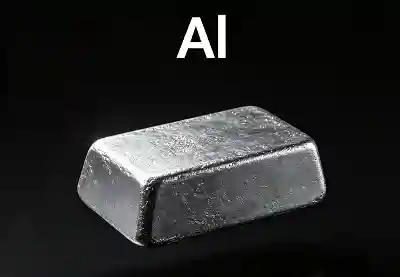 Aluminum has a natural oxide protective film on its surface, which can resist the corrosion of seawater, various fresh waters and chemical agents.With its low density, excellent thermal conductivity, non-magnetic properties, high ductility, and ability to form alloys with numerous metals, aluminum has become one of the most widely used and highly recyclable materials globally.
Global aluminum consumption is enormous, but bauxite (the main source of pure aluminum) is a non-renewable mineral resource.As resources become increasingly scarce and environmental compliance costs continue to rise, recycled aluminum products such as aluminium profiles, auto parts, and beverage cans are becoming increasingly apparent. These recyclable products align with the concept of green development and are an ideal choice for the continued advancement of a low-carbon economy.
What is Recycled Aluminum?
Recycled aluminum, also known as secondary aluminum, refers to aluminum alloys or aluminum metal obtained by remelting and refining scrap aluminum products, or aluminum-containing waste.
Compared to primary aluminum mining and electrolytic smelting, recycled aluminum production requires only about 5% of the energy of primary aluminum production, and greenhouse gas emissions are significantly reduced. According to data from the International Aluminium Institute (IAI), approximately 75% of all aluminum produced to date is still in circulation.
Raw Material Sources for Recycled Aluminum
These scrap materials mainly come from two sources:
- Pre-consumer scrap
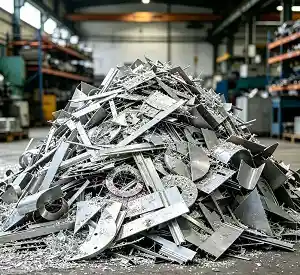 This refers to manufacturing waste generated during aluminum production, including offcuts, trimmings, chips, and defective products from the production of extruded aluminum profiles, automotive extrusions, and defective products that never entered the consumer market.This type of scrap has a pure composition with minimal impurities and high recycling value.
- Post-consumer scrap
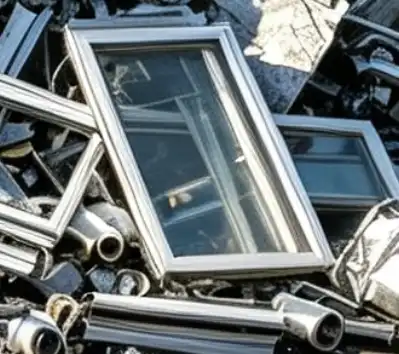 This refers to aluminum products that have reached the end of their service life, such as scrap building doors and windows, curtain wall profiles, scrapped photovoltaic brackets, auto parts, beverage cans and aluminum packaging materials, etc. After professional collection, sorting, and pretreatment, this type of waste can be remelted into high-quality recycled aluminum products.
Why Can Aluminum Be Recycled Infinitely?
Like all metals, aluminum is composed of atomic bonds and exists in a crystalline structure. This makes aluminum easy to melt and re-solidify without altering its fundamental physical and chemical properties. Therefore, aluminum can be recycled repeatedly, theoretically without any limit on the number of times.
In contrast, plastics are polymers that undergo molecular chain breakage and performance degradation during recycling. While all materials experience some loss during melting and recycling (such as oxidation loss), the metal itself does not degrade. Taking aluminum as an example, during the smelting process, only a small amount of metal is lost due to oxidation, and the nature of the remaining metal is not changed, so it can be recycled repeatedly.
Performance Comparison: Recycled Aluminum vs. Primary Aluminum
High-quality recycled aluminum is essentially equivalent to primary aluminum in terms of mechanical properties, strength, appearance, durability, and corrosion resistance. It can be widely used in construction, automotive, aerospace, electronics, and other fields.
It should be noted that due to the gradual accumulation of alloying elements (such as iron and copper) during repeated recycling, the concentration of certain residual elements in recycled aluminum may be slightly higher than in primary aluminum.
However, with advanced sorting technologies and precise alloy composition control, modern manufacturers can ensure that recycled aluminum products fully comply with required industry standards and technical specifications.
What Is Recycled Aluminum Extrusion?
Recycled aluminum profiles specifically refer to aluminum alloy profiles of various cross-sectional shapes made from recycled aluminum as the main raw material through an aluminum extrusion process. The recycling process typically includes collecting and sorting scrap, removing impurities, melting the aluminum, and then extruding it into various profile shapes.
Recycled aluminum profiles have an extremely wide range of applications, covering building curtain walls and window-door frames, automotive parts, photovoltaic frames, industrial structural components, and electronic device housings.Standard recycled aluminum extrusion can almost entirely cover most common application scenarios of primary aluminum extrusions.
Aluminum can be recycled repeatedly with almost no loss of its material properties or quality. Extruded aluminum profiles used in construction today can be reprocessed into new products decades later, maintaining the same strength, durability, and corrosion resistance as when originally used.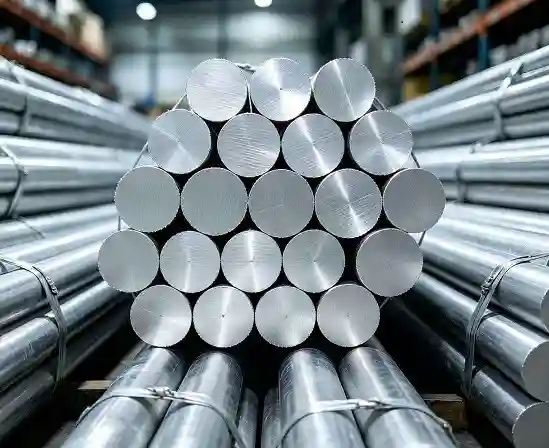
Six Core Advantages of Recycled Aluminum Profiles
- Significant Energy Savings
The most significant advantage of recycled aluminum lies in its superior energy efficiency. The energy required to recycle aluminum is only about 5% of the energy required to produce primary aluminum from bauxite.This means that for every ton of recycled aluminum produced, manufacturers can save approximately 95% of the energy used in primary aluminum production.
Consequently, manufacturers can produce aluminum extrusions of equal quality with far less energy.
For example: while the electrolysis process for primary aluminum consumes approximately 13,500–14,000 kW·h per ton, recycled aluminum requires only about 680–1,000 kW·h.
- Significantly Reduced Carbon Emissions
Energy conservation directly translates into a substantial reduction in greenhouse gas emissions.According to the International Energy Agency (IEA),the emissions from producing one ton of primary aluminum can reach 16 tons of CO2 equivalent, while the emissions from producing one ton of recycled aluminum are only about 0.5 tons of CO2 equivalent. Increasing the use of recycled aluminum is the most definitive way to reduce carbon emissions in the aluminum industry.
Some advanced recycled aluminum products now have a near-zero carbon footprint. For example, Hydro CIRCAL—a brand product launched by the Norwegian company Hydro—has a minimum post-consumer scrap content of 75%. Certified by the third-party EPD, its extruded ingots have a carbon footprint of only 1.9 kg of CO2 equivalent per kilogram of aluminum, making it one of the products with the lowest carbon footprint globally.
- Protecting Natural Mineral Resources
Bauxite is a non-renewable mineral resource. Large-scale primary aluminum production requires continuous mining of mountains, causing vegetation destruction and soil pollution. Expanding the use of recycled aluminum can reduce global demand for bauxite, protect the ecological environment around mining areas, and promote the circular development of urban mining.
For countries with high dependence on bauxite imports, developing the recycled aluminum industry helps reduce reliance on foreign resources and enhances supply chain resilience.
- Infinite Recyclability
Unlike many materials that degrade with each recycling cycle, aluminum retains its complete mechanical properties—strength, durability, and corrosion resistance—through repeated recycling and reuse. This means that recycled aluminum extrusions perform as excellently as primary aluminum extrusions, enabling a true circular economy.
- Cost Competitiveness
Despite fluctuations in scrap aluminum prices, aluminum recycling offers a significant cost advantage. Primary aluminum production is costly (electricity, alumina, fuel, etc., constitute the majority of costs), which are typically passed on to consumers. From a cost perspective, aluminum products made from recycled aluminum are becoming an increasingly attractive alternative.
- Support for Green Building Certification
As global green building standards become increasingly stringent, projects utilizing low-carbon materials such as recycled aluminum can gain bonus points for certifications in international environmental rating systems such as LEED and BREEAM. Many construction projects now require the use of low-carbon materials as a condition for approval.
Furthermore, the EU Carbon Border Adjustment Mechanism (CBAM), implemented on January 1, 2026, requires EU importers to declare the implied carbon emissions of imported goods and purchase equivalent CBAM certificates to match carbon prices in the EU Emissions Trading System (ETS).
For the construction industry, using high-carbon-footprint primary aluminum profiles will face additional cost pressures, further highlighting the competitive advantage of recycled aluminum profiles.

Application Prospects of Recycled Aluminum Alloys
With the advancement of global "dual carbon" goals, recycled aluminum is ushering in unprecedented development opportunities:
- Construction Sector
Stringent green building standards and LEED and BREEAM certifications are driving demand for low-carbon building materials. As a preferred material for construction, recycled aluminum profiles, like virgin aluminum profiles, possess classic characteristics beneficial to maintaining building lifespan, such as lightweight, high strength, corrosion resistance, and wear resistance.
However, recycled aluminum section have another significant characteristic—low carbon footprint, making them an economical and environmentally friendly low-carbon material.
- Automotive Industry
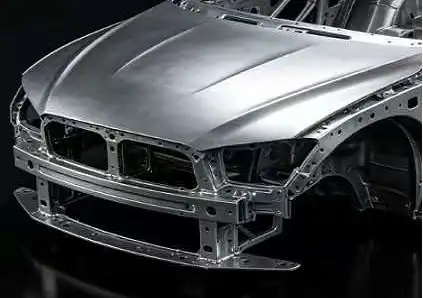
Automotive brands are increasingly relying on recycled aluminum to reduce emissions during vehicle production. Recycled aluminum is used for body panels, alloy wheels, engine components, and electric vehicle battery housings.
Leading automotive industry initiatives include:
Ferrari: 75% recycled aluminum was used in its first electric supercar, the Elettrica, reducing CO2 emissions by 90% compared to traditional alloy production.
Jaguar Land Rover (JLR): Partnered with Novelis to establish the REALCAR project, creating a closed-loop system using a dedicated round-trip rail service. Their specialty aluminum alloys contain up to 50% recycled components in all their vehicles.
Toyota: At its Missouri plant, it produces over 2 million cylinder heads annually using recycled aluminum.
Ford: The company's mass-produced models that heavily utilize aluminum, such as the F-150 and Super Duty, are generating significant amounts of high-quality automotive-grade waste as the first-generation trucks are scrapped.
- Photovoltaic Industry
Recycled aluminum frames and mounting brackets carry a carbon footprint of only 3% that of primary aluminum, making them the preferred choice for carbon reduction in photovoltaic modules.
- Consumer Electronics
Apple's MacBook Air casing is now 100% recycled aluminum, and iPhones are gradually increasing the proportion of recycled aluminum.
Conclusion
As the world accelerates toward a low-carbon future, the circular utilization of metal resources has become a global consensus. Recycled aluminum products, with their significant energy-saving and emission-reduction advantages, infinite recyclability, cost competitiveness, and increasingly robust quality assurance systems, are rapidly replacing primary aluminum products in construction, automotive, photovoltaic, electronics, and other sectors. Recycled aluminum is not only the ideal choice for current green development but also an inevitable trend for future sustainable manufacturing.
| Fortune Alu Co.,Ltd.Professional Aluminum Manufacturer, Ready to Serve You. |
| You Are Welcome to : phone call, Message, Email & search for us, etc. |
| Email:info@fortune-alu.com |
 Aluminum has a natural oxide protective film on its surface, which can resist the corrosion of seawater, various fresh waters and chemical agents.With its low density, excellent thermal conductivity, non-magnetic properties, high ductility, and ability to form alloys with numerous metals, aluminum has become one of the most widely used and highly recyclable materials globally.
 This refers to manufacturing waste generated during aluminum production, including offcuts, trimmings, chips, and defective products from the production of extruded aluminum profiles, automotive extrusions, and defective products that never entered the consumer market.This type of scrap has a pure composition with minimal impurities and high recycling value.
 This refers to aluminum products that have reached the end of their service life, such as scrap building doors and windows, curtain wall profiles, scrapped photovoltaic brackets, auto parts, beverage cans and aluminum packaging materials, etc. After professional collection, sorting, and pretreatment, this type of waste can be remelted into high-quality recycled aluminum products.
