Aluminum profile processing can be summarized as: aluminum bar melting and casting, profile extrusion aging, surface treatment of the three processes; mass production of the entire process to complete the processing of about 3-4 days, and then transported to the processing plant, generally need 7-10 days, the entire processing of profiles to or to the factory, the general profiles factory commitment of about 15 days, the profile processing is the critical path of aluminum alloy windows and doors, so the general duration is more concerned about the factory order time.
1. Aluminum bar melting and casting
Large-scale factories are choosed pure aluminum ingots as raw materials, and then according to the customer's demand orders for batching, melting and casting;
Batching: according to the specific alloy grade to be produced, calculate the amount of various alloy components added, and reasonably match the various raw materials;
Melting: add the matched raw materials into the melting furnace according to the process requirements, and through the degassing, deslagging refining means to effectively remove the slag and gas within the solution;
Casting: the melted aluminum industry under certain casting process conditions, through the deep well casting system, cooling casting of various specifications of the round casting rod; *Pure aluminum ingot as raw material
 *Aluminum alloy bar to be extruded
After casting, the products are aluminum alloy rods, the length of which is generally 8-12m. The diameters are generally 90 mm, 105mm, 120mm and 178mm; after casting, the aluminum alloy rods can be processed in the next step of the procedure, profile extrusion and aging;
2. Profile extrusion aging
Aluminum rods after molding, can be sent to the profile extrusion line, profile extruder will first of all aluminum rods heated to appropriate temperature, it is sent to the extruder mouth for extrusion, through different molds can be extruded out of different sections of the profile. Just extruded profiles have no strength, after sizing and breaking, they need to be sent to the aging furnace for 4-8 hours of aging to increase the strength.
Extrusion is the means of profile forming, extrusion of the three elements of the aluminum bar, mould, extrusion cylinder; because aluminum profiles are generally used in hot extrusion, so the aluminum bar, mould, extruder need to be heated aluminum bar has a special heating furnace, the heating temperature of 460-520℃. The mould also has a special heating furnace, the heating temperature of 460-520℃. The extruder can be used to heat the aluminum bar. The mould also has a special heating furnace, heating temperature 450-480℃. Extrusion barrel has its own heating system, heating temperature 420-450℃. *Extruders have their own heating system
After extrusion, the profiles are aged in an aging furnace.
After the manual aging, we get the base material, which is available in different sizes, such as architectural, industrial, door and window profiles, curtain wall profiles, etc., and then processed in the next step;
3. Surface treatment
Profile molding has a certain strength, you can surface treatment, four surface treatment methods in the powder coating, fluorocarbon spraying of raw materials is basically the same; anodic oxidation, electrophoresis principle is basically the same; in all the surface treatment before, need to carry out pre-treatment, pre-treatment of the role of the profile: remove the profile surface extrusion process of dust, dirt, grease, handprints and so on, the bare pure metal substrate.
Nowadays, the surface treatment of profiles are: powder coating, fluorocarbon spraying, anodizing, electrophoresis;
Powder spraying, fluorocarbon spraying: the profile and the spray gun to form positive and negative poles, the formation of electrostatic high-voltage electric field in the two poles, the sprayed paint particles charged, under the action of the electric field on the surface of the profile to form a uniform film of paint, and finally baked and cured.
The difference between powder coating and fluorocarbon spraying is that powder coating sprays out powder particles and fluorocarbon spraying sprays out a kind of paint. Paint film thickness in addition to sending the testing institute for testing, conditions can also be used to detect the handheld film thickness detector, or cursor calipers for rough detection (powder coating, for example, the general window profile thickness of 1.4mm, plus film thickness 0.04-0.12mm, the site should be between 1.44-1.52mm after the profile thickness measurement).
Anodic oxidation: put the profile in electrolyte solution, use electrolysis to generate oxide film on its surface; put the oxidized profile in inorganic salt electrolyte solution for electrolysis, so that the metal ions in the solution penetrate into the oxide film pinholes, so as to make the oxide film coloring; and finally sealing holes to close the pores of the oxide film generated by anodic oxidation and to improve the film layer's anti-pollution and corrosion-resistant properties.
Electrophoresis: The andodized profile is placed in heat curing water-soluble acrylic transparent resin paint solution, under the action of electric field, the negatively charged paint particles move towards the profile to form a paint film; finally baking and curing.
Comparison of several surface treatments:
① Advantages of powder coating:
a. High efficiency and energy saving - because it is a one-time film, it can increase productivity by 30-40% and reduce energy consumption by about 30%, which reduces the production cost for factories; less pollution; no organic solvent volatilization (no harmful gases such as toluene and xylene in paints and coatings).
b. Coating film performance is good - a one-time film thickness of up to 50-80μm, its adhesion, corrosion resistance and other comprehensive indicators are relatively excellent; high rate of finished products: before curing, can be a second re-spray. There are more kinds of powder coating process, the common ones are electrostatic powder spraying and dip molding.
c. More color choices - due to the variety of powder colors, coupled with the use of insulation profiles, can be made in accordance with customer requirements for a variety of colors, indoor and outdoor color difference; powder coating storage, transportation safety and convenience.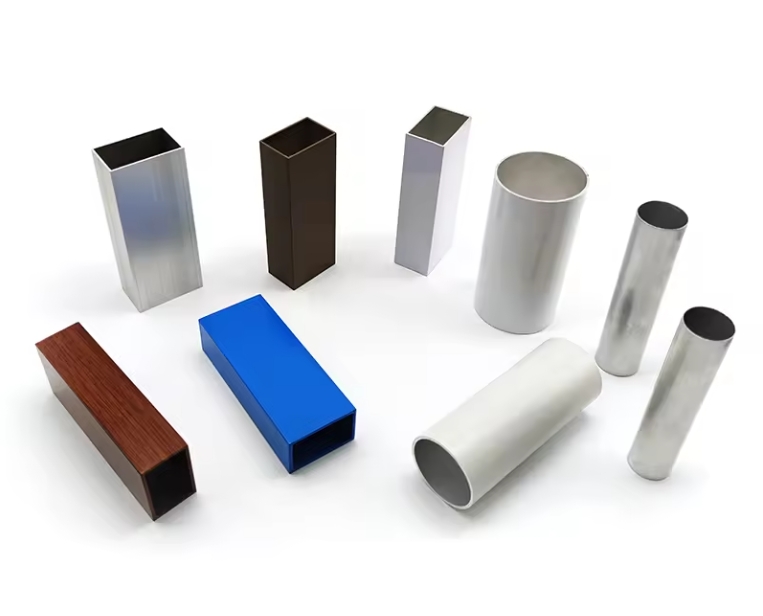
Disadvantages of powder coating:
If the color is bright, it is easy to fade; the surface of profiles with poor surface treatment is easy to produce orange peel (uneven coating, uneven, visually like orange peel), or even de-powdering;
Powder coating has a higher market share due to more color choices and lower cost than fluorocarbon spraying.
② Advantages and disadvantages of electrophoresis treatment:
a. With strong paint film hardness, strong impact resistance.
b. High paint film adhesion, not easy to fall off and aging.
c. Stronger abrasion resistance, weather resistance and alkali resistance than aluminum oxide material.
d. The surface color is rich and beautiful, with mirror-like glossy effect.
As the electrophoresis layer is transparent and bright, it requires high quality of aluminum ingots, smooth surface of extruded material, less mechanical defects, and strict management of oxidized coloring process, because any tiny defects and stains will be exposed under the transparent paint. Therefore, the management requirements for the electrophoresis process are high to improve the yield of aluminum profiles; and the color choice of electrophoresis will be less, after all, the color difference will be obvious; *Electrophoresis treated profiles
③ Fluorocarbon spraying advantages and disadvantages:
With anti-ultraviolet explanation, strong resistance to chalking, long-term maintenance with color and luster; service life of 25-30 years; and powder coating is generally about 10 years;
Fluorocarbon spraying has excellent resistance to color fading, frost resistance, corrosion resistance to atmospheric pollution (acid rain, etc.), strong UV resistance, strong crack resistance and the ability to withstand harsh weather conditions. It is inferior to general coatings.
However, the disadvantage of fluorocarbon is that the cost is more than two times higher than the cost of powder coating; *Fluorocarbon surface treatment
With the continuous iteration of new technology, surface treatment technology and the emergence of electro-fluorocarbon, as well as wood grain transfer (in fact, on the basis of powder coating or electrophoretic spraying, through heating, pressurization, transfer paper or transfer film on the wood grain pattern, rapid transfer and penetration into the profiles that have been sprayed);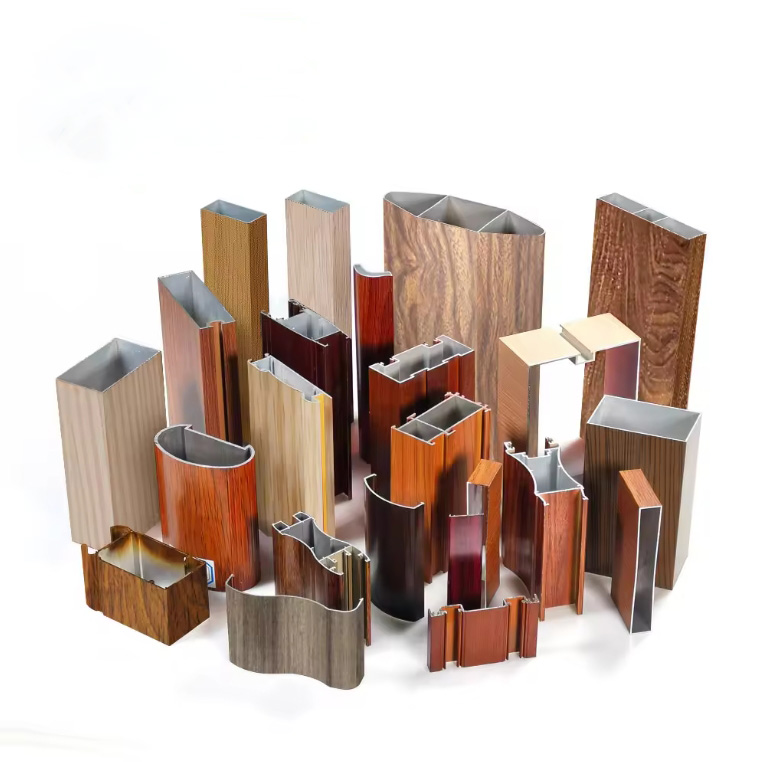
④ Wood grain transfer surface treatment:
In summary: aluminum alloy profile is the most important component of aluminum alloy doors and windows, and high-quality aluminum porfiles have the following characteristics:
a. The surface is flat and smooth to the touch.
b. Purchased the same one or the same batch of profiles, the surface treatment color uniformity, no obvious color different.
c. Aluminum alloy profile surface, there should be no depression or bulge.
d. Aluminum alloy profile surface without opening bubbles (white spots) and ash (black spots), as well as cracks, burrs, peelings and other obvious defects.
